Chair Yoga at Home vs Senior Center Classes: Which Is Better?
When people compare chair yoga at home with senior center classes, they usually think the choice is about cost or comfort. It’s really about structure. Home practice gives you total convenience. No driving, no weather issue, no waiting for class time, no pressure to keep up with anyone else. You can do ten minutes in your slippers before breakfast or a longer session in the afternoon when your joints feel looser. For plenty of older adults, that flexibility is exactly what makes exercise possible in the first place.
Senior center classes bring the opposite advantage: built-in support. You show up, there’s an instructor, there are other people, and the session happens whether you feel motivated or not. That matters more than most people admit. If you tend to skip workouts when nobody is expecting you, a class can keep your seniors fitness routine from drifting into “maybe tomorrow.” If you’re already self-directed and comfortable following a safe routine on your own, home may be the easier win. So the better option depends less on yoga itself and more on what helps you actually stick with it.
Safety Isn’t Just About Falling, It’s About Doing the Right Version of the Pose
Safety is the first serious filter when you compare chair yoga options. A lot of people assume chair yoga at home is safer because you’re in a familiar space. Sometimes that’s true. You know your chair, your floor, your lighting, your bathroom is close by, and there’s no rush getting in and out the door. But home also makes it easier to do movements slightly wrong for weeks without noticing. A lifted shoulder, a twisted knee, a habit of leaning too far forward, holding your breath during effort. None of that sounds dramatic, but small mistakes can turn into neck strain, back irritation, or soreness that makes you quit.
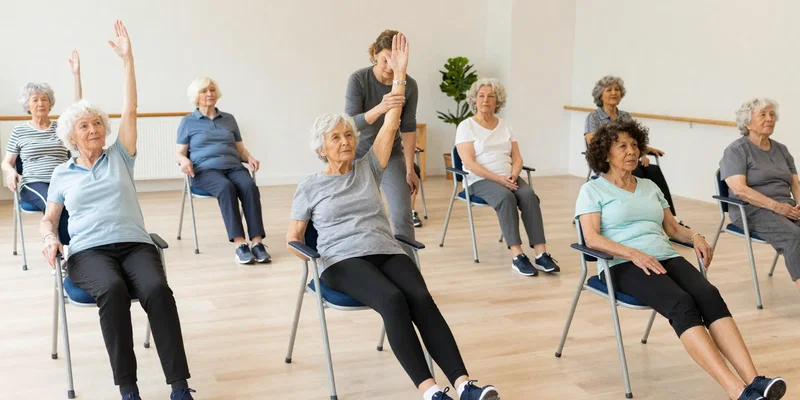
Senior center classes have an edge here, especially for beginners, people with balance issues, or anyone dealing with arthritis, osteoporosis, joint replacements, dizziness, or recent recovery from illness. A good instructor can spot compensation patterns and offer modifications on the spot. They can tell you when to shorten your range of motion, skip a forward fold, or keep one hand anchored to the chair. That said, not every class is excellent. Some are crowded. Some move too fast. Some instructors are better at energy than technique. The smart move is simple: if you’re new, medically complicated, or nervous, a well-run class is often safer at first. If you already know your limits and follow clear instruction from a trusted source, home can be perfectly safe with the right setup.
Home Practice Wins on Flexibility, but Classes Win on Consistency
Here’s the thing about chair yoga at home: it fits real life better. You can work around fatigue, doctor appointments, grandkids, bad sleep, and random low-energy days. That matters because older bodies are not machines. Some mornings you’re stiff. Some afternoons you feel great. Home practice lets you respond to that instead of forcing yourself into a fixed schedule. You can do a gentle mobility routine on rough days and a more active sequence when you’ve got more in the tank. That kind of adaptability is one reason home practice often works well for people managing chronic pain or fluctuating energy.
But flexibility can become a trap. The same freedom that makes home practice appealing also makes it easy to postpone. Senior center classes create rhythm. Tuesday and Thursday at 10 means Tuesday and Thursday at 10. You get dressed, go, move, come home. Decision-making drops. And when decisions drop, habits get easier. For seniors fitness, consistency usually matters more than intensity. Two moderate classes every week beat a vague plan to practice at home “whenever there’s time.” If you know you thrive with routine, group classes have a big advantage. If rigid schedules make you avoid exercise altogether, home is probably the better fit.
The Social Side Is Not a Bonus Feature. For Many Seniors, It’s the Main Benefit
People often talk about yoga in terms of flexibility and balance, which is fine, but for many older adults the bigger issue is isolation. That’s where senior center classes can pull far ahead. A class gives you faces you recognize, small talk before the session, maybe coffee after, maybe a new friend who notices when you’re missing. That social contact is not fluff. It can improve mood, sharpen routine, and make exercise feel less like a chore. If you live alone, don’t drive much, or feel your world getting smaller, a good class does more than stretch your hamstrings.
Home practice can still feel satisfying, especially if you value privacy or get drained by group settings. Some people simply prefer moving without an audience. No comparing bodies, no chatty room, no pressure to smile through a low-energy day. And if you’re introverted, recovering from illness, or not comfortable in community spaces, that privacy can be a relief. But it’s worth being honest with yourself: are you choosing home because it truly suits you, or because it’s easier to stay isolated? Sometimes the better option is the one that nudges you gently back into the world.
Cost, Equipment, and Access: The Practical Stuff That Actually Decides It
On paper, chair yoga at home usually looks cheaper. You may need nothing more than a sturdy chair, comfortable clothes, and a reliable video or printed routine. No transportation costs. No class fees. No hassle with parking or bad weather. For someone on a fixed income, that’s a real plus. It also helps people in rural areas or places where senior center classes are limited, full, or simply not very good. Access is not equal everywhere, and home practice can close that gap fast.
Still, cheap isn’t always the same as effective. Some people need the accountability of paying for a class. Others need a trained instructor because their medical history makes generic online routines a bad idea. Senior centers are often surprisingly affordable, and some include classes in a membership or community program. Before you assume one option is better, look at the full picture: transportation, class quality, schedule, weather, mobility, tech comfort, and whether you can safely get up and down from movement transitions if a class includes them. The “best” setup is the one you can access regularly without turning the process into a weekly headache.
Which Option Is Better for You? Match the Format to Your Health, Personality, and Habits
If you want a clean answer, here it is: senior center classes are usually better for beginners, people who need supervision, and anyone who benefits from accountability and social connection. Chair yoga at home is usually better for experienced exercisers, people with unpredictable schedules, those who prefer privacy, and seniors who already know how to modify movements safely. Neither option is automatically better for everyone, which is why so many articles on this topic feel unsatisfying. They try to crown one winner when the smarter approach is matching the format to the person.
A hybrid approach often works best. Learn in class first, then practice at home between sessions. Or do home sessions most days and use a weekly class to check form and stay connected. If you’re trying to compare chair yoga options honestly, ask yourself four blunt questions: Do I need someone watching my form? Will I actually do this alone? Do I want social contact or peace and quiet? Can I get to class without it becoming a burden? Your answers will tell you more than any blanket advice. The right choice is the one that feels safe, doable, and realistic enough to still be part of your life three months from now.