Can Chair Yoga Help Sciatica? A Senior-Friendly Approach
Chair yoga for sciatica can absolutely help some people, especially older adults who need a safer, lower-impact way to move. The big reason is simple: sciatica often gets worse when the hips, lower back, and hamstrings stiffen up, or when sitting turns into hours of not moving at all. Gentle seated movement can reduce that “locked up” feeling, improve circulation, and take some pressure off irritated tissues. For many seniors, that alone can make walking, standing up, and getting through the day feel a lot less miserable.
That said, chair yoga is not magic, and it is not the right tool for every kind of sciatic pain. If the nerve is being strongly compressed, or if symptoms are coming from a disc issue, spinal stenosis, or severe inflammation, some stretches may help while others can make things worse. That’s why the best approach is gentle yoga for seniors that focuses on comfort, breathing, and slow range of motion instead of pushing for a deep stretch. Think “calm the area down” more than “fix it in one session.” If a movement causes sharper pain, tingling that shoots farther down the leg, or numbness that ramps up, that’s your cue to stop—not power through.
Why Seated Movement Often Feels Better Than Floor Work
For a lot of seniors, floor-based yoga is the real obstacle. Not the stretching itself—the getting down there, getting back up, and dealing with balance while doing it. Chair-based movement removes most of that friction. You get support under your body, better stability through the feet, and less fear about losing balance. That matters more than people think. When you feel safe, you stop bracing so hard, and that can make seated pain relief a lot more effective.
There’s also a practical reason chair work helps: it lets you isolate motions without dumping extra stress into the spine. A small hip hinge, ankle movement, seated figure-four variation, or gentle spinal lengthening can be enough to ease tension around the glutes and lower back without turning the session into a flexibility test. Actually, that’s where many people go wrong with sciatica. They assume more stretch equals more relief. Usually not. The nerve hates being yanked on. Muscles around it may need a little space, but the work should feel controlled, gradual, and almost boring. Boring is good here. Boring means you’re not aggravating an already cranky system.
The Best Chair Yoga Moves for Sciatica Are Small, Calm, and Specific
If you want chair yoga for sciatica to be useful, stick with a short list of movements that target common trouble spots without creating more nerve irritation. A good starting place is seated posture reset: sit toward the front of the chair, feet flat, hands on thighs, and gently lengthen through the crown of the head without arching hard. Stay there for a few slow breaths. Then try ankle pumps and gentle knee extensions, one side at a time. These aren’t glamorous, but they can improve circulation and wake up the leg without forcing a stretch.
From there, a light seated figure-four can help if the outer hip and glute area feel tight. Cross the ankle over the opposite shin or lower thigh—only if your knee tolerates it—and lean forward a little from the hips while keeping the back long. You should feel a mild opening in the hip, not a zing down the leg. Another solid option is a seated hamstring glide: extend one leg slightly with the heel down, keep the chest lifted, and hinge forward just a touch. Again, tiny motion. For some people, even seated marching helps because it gets the hips moving and reduces stiffness from long periods of sitting. The common thread in all of these senior-friendly stretches is restraint. You’re looking for “that feels easier” afterward, not “I really attacked the problem.”
What to Avoid When Sciatica Is Flared Up
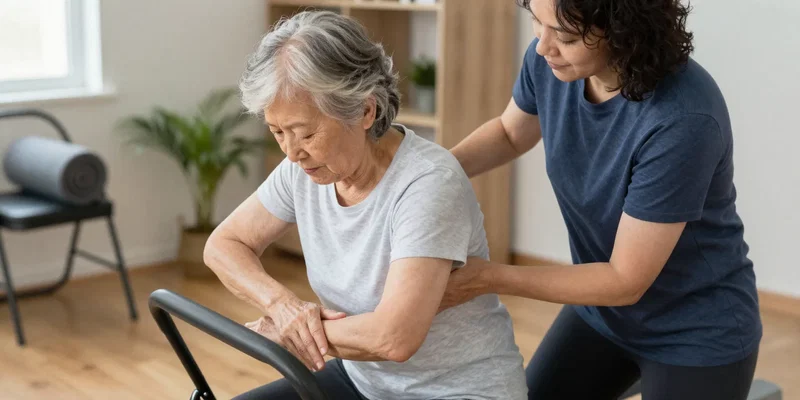
Some movements that are perfectly fine in a general yoga class are not great during a sciatic flare. Deep forward folds can be a problem for some people, especially if the pain is linked to a disc issue. Aggressive hamstring stretching can also backfire because it may tension the nerve instead of helping the muscle. Twists are another one to handle carefully. A small, easy rotation may feel good; a hard crank through the low back is a different story. If you feel pain traveling farther down the leg during the move, that’s not “working it out.” That’s a warning.
One more thing: don’t confuse soreness with success. With sciatica, the goal is often to reduce symptoms and help the body tolerate movement again. If you finish your session and feel more burning, more tingling, or more weakness, the session was too much. Keep it shorter. Make the range smaller. Use more support. This is where gentle yoga for seniors beats ambitious yoga every single time. And if you have red-flag symptoms—loss of bladder or bowel control, rapidly worsening weakness, major numbness, or pain after a fall—skip the stretches and get medical help. Chair yoga is a useful tool, but it should never be asked to do a doctor’s job.
How Seniors Can Build a Simple Routine That Actually Helps
The most effective routine is usually short enough that you’ll do it consistently. Five to ten minutes, once or twice a day, is often more helpful than one long session every few days. Start with posture reset and breathing for a minute. Add ankle pumps, seated marching, and a couple of slow knee extensions. If they feel good, include one gentle hip opener or hamstring-focused movement on each side. That’s enough. You don’t need a 45-minute flow and inspirational background music. You need repeatable relief.
Timing matters too. Many people do better with seated pain relief after they’ve been sitting a while, first thing in the morning when everything feels stiff, or later in the day when the hip area starts tightening up. Keep a sturdy chair, move slowly, and pay attention to the next few hours after your session. That delayed response tells you a lot. If walking feels smoother and the leg feels less irritated, you’re on the right track. If symptoms spike, scale back. Chair yoga for sciatica works best when it becomes part of a broader routine: regular position changes, short walks, less marathon sitting, and a bit of patience. Relief usually comes from steady, sensible repetition—not one heroic stretch.
When Chair Yoga Is Worth Trying—and When You Need More Than Stretching
If your symptoms are mild to moderate, come and go, and tend to improve when you move around, chair yoga is well worth trying. It’s especially useful for older adults who feel intimidated by floor exercises, have balance concerns, or just want a practical way to loosen up without overdoing it. In that sweet spot, senior-friendly stretches can reduce stiffness, improve confidence, and make everyday movement less guarded. And that matters. People with sciatic pain often start moving less because they’re afraid of triggering it, which usually leads to more stiffness and more discomfort.
But if your pain is severe, constant, or paired with marked weakness, you may need more than a home routine. A physical therapist can help figure out whether the issue responds better to flexion-based or extension-based movement, nerve glides, strength work, or something else entirely. That kind of specificity is valuable because sciatica is a symptom, not one single diagnosis. Chair yoga can still be part of the picture, but it works best when it matches the actual cause of the pain. Done gently and chosen well, it can be one of the safest ways to keep moving when your back and leg would rather you didn’t.